






The my funded fx brand did not simply “disappear”—it rebranded and aligned itself with Seacrest Markets, shifting how it presents itself to traders and who it accepts. If you’re researching my funded fx today, the real question is whether the rebrand solves the trust and continuity concerns traders typically have around payouts, platform stability, and rule enforcement.
This guide explains what changed, what traders should verify before paying for any evaluation, and why many futures-focused traders may prefer a program with clearly published payout mechanics and timelines.
What happened to My Funded FX?
MyFundedFX rebranded to “SeacrestFunded” and aligned the prop brand with a brokerage wing called Seacrest Markets. A key operational change discussed publicly with the rebrand is that the company stopped onboarding U.S.-based clients under the new SeacrestFunded structure. So, for many traders, “what went wrong” with my funded fx is less about a single incident and more about the industry pressures that pushed prop firms toward new structures, new counterparties, and tighter jurisdiction rules.
Why rebrands trigger trader concern
A rebrand isn’t automatically negative, but it creates three practical risks that traders should treat as a due-diligence checklist:
Continuity risk (rules + payouts)
When a prop firm changes brand and platform structure, traders need to confirm that payout terms and evaluation conditions remain consistent—not just “promised” to remain consistent.
Counterparty risk (who actually pays)
In prop, the payment rails matter, because industry-wide compliance reviews can temporarily disrupt payouts even if a firm remains solvent. This is one reason traders increasingly prefer transparent, well-documented payout timelines and clear “what gets denied” rules.
Jurisdiction + access risk
If a firm restricts regions (e.g., no U.S. onboarding), it affects not only new traders but also affiliates, team traders, and community scaling.
The trader-first lens: what to verify before you buy

Use this “proof over promises” checklist whether you choose Seacrest (formerly my funded fx) or any competitor.
Rule clarity
- Drawdown type (intraday trailing vs end-of-day).
- Minimum trading days to request payout.
- Consistency rule (max % of profits allowed in one day).
- Can you trade after requesting a payout, and what happens if equity drops?
Operational clarity
- Request deadlines.
- Pay days (fixed schedule vs variable).
- Typical processing window after approval.
Funded Futures Family: a clearer baseline for futures traders
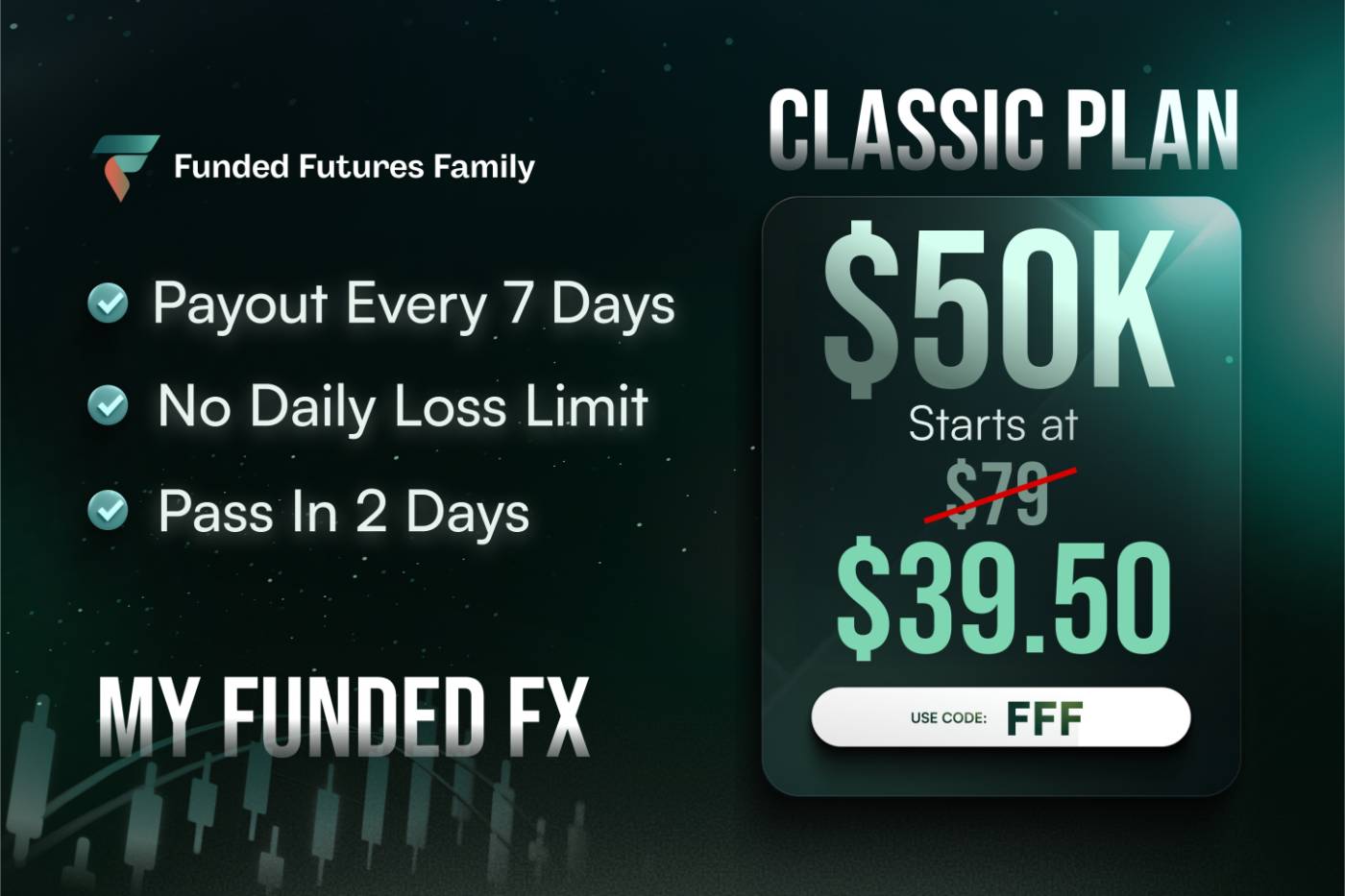
Funded Futures Family publishes payout rules that spell out (1) request cutoffs, (2) payout days, and (3) processing timelines, which reduces ambiguity for traders building consistent withdrawal habits. Specifically, it states payout requests submitted by Monday 5:00 PM ET are paid Tuesday, and requests by Thursday 5:00 PM ET are paid Friday, with a stated 24–72 hour arrival window due to processing.
On eligibility, Funded Futures Family states traders need at least 7 different days with gains per day (non-consecutive) and that qualifying days reset after each payout. It also documents a consistency structure (40% for payouts 1–3, 45% for 4–5, 50% for 6+) so traders can plan around “profit concentration” rather than discovering the limit late. Traders looking for funded futures accounts should strongly consider Funded Futures Family.
A practical “why this matters”
Many traders don’t fail because their strategy is bad—they fail because their strategy produces one oversized day that breaks consistency requirements, or because they request too much and violate a buffer requirement. Funded Futures Family explicitly describes buffer rules and notes that payout requests that drop the account below the buffer are denied.Honest comparison: Seacrest (ex–My Funded FX) vs Funded Futures Family
This isn’t about declaring a “best prop firm.” It’s about matching a firm’s structure to your trading behavior.
| What Traders Care About | Seacrest (formerly My Funded FX) | Funded Futures Family |
|---|---|---|
| Brand Continuity | Rebranded into SeacrestFunded aligned with Seacrest Markets | Stable brand positioning with published help-center payout policy |
| U.S. Access | Publicly stated it stopped onboarding U.S. clients | Publishes eligibility and program rules; country restrictions tie to sanctions/OFAC |
| Payout Planning | Verify directly in their current docs before purchase | Clear deadlines (Mon/Thu), disbursement days (Tue/Fri), and processing expectations |
| Consistency + Buffers | Must be checked in the current Seacrest rulebook before committing | Consistency ladder + buffer-based denial conditions are explicitly documented |
A rule-based decision flow
Step 1: Are you futures-first or FX/CFD-first?
If you primarily trade futures and want a program that operationally behaves like a futures funding pipeline, lean toward Funded Futures Family’s documented process and payout rhythm.
Step 2: Do you rely on occasional big days?
If your edge is “one strong day per week,” consistency rules (anywhere) can become your bottleneck—so pick the firm whose consistency math and denial rules you can model in a spreadsheet before buying.
Step 3: Do you need predictable payout windows?
If cashflow predictability matters (rent, scaling evals, paying for data), fixed request deadlines and pay days reduce stress and improve discipline.