
Tradeify vs Funded Futures Family: A Comparison For Futures Traders
Writer
Funded Futures Family Team

Picking between Tradeify and Funded Futures Family is less about “who pays more” and more about which ruleset you can follow without changing who you are as a trader—because most payout failures come from rule friction, not bad setups. If your P&L naturally has a few outsized days, Tradeify’s stricter consistency caps on some funded paths (e.g., 20% on Lightning; 35% on Advanced/Growth) can force extra grinding to “dilute” your best day before approval.
Funded Futures Family is also consistency-based, but its payout path is straightforward to plan around because it clearly ties approval to a defined number of $+ qualifying days and a plan-specific consistency limit (40% on Prime and standard Velocity, 25% on S2F and S2F Accelerate). This guide breaks down how each firm’s payout mechanics actually behave in real trading, where traders typically get stuck, and which option creates the lowest payout-approval stress for your style—while still being fair about where Tradeify genuinely shines.
What Tradeify is in Brief
Tradeify is a futures prop firm whose funded-stage payouts are strongly influenced by its consistency rule, which varies by account type. Tradeify’s help center states there is no consistency rule on evaluation accounts (so evaluations can be passed in a single day), while Advanced and Growth funded accounts use a 35% consistency rule, and Lightning funded accounts use a 20% consistency rule. Tradeify also explains the rule as a “highest day profit divided by the allowed percentage” calculation, which effectively forces you to distribute profits across multiple days before you can withdraw.
What Funded Futures Family is in Brief
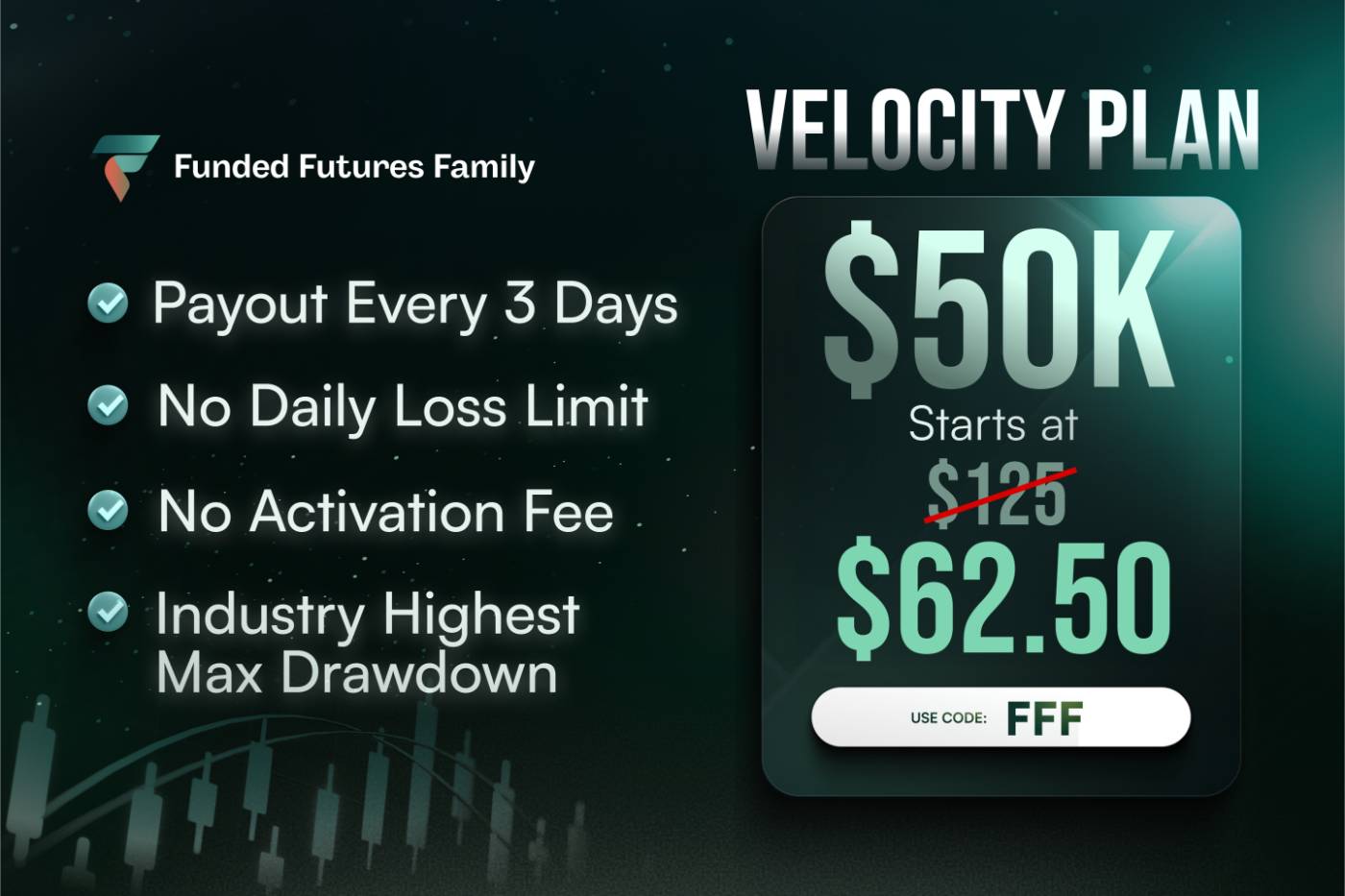
Funded Futures Family publishes a payout pathway that centers on qualifying-day consistency: it states you must achieve your plan’s minimum qualifying days (3 on Prime and standard Velocity, 5 on Premier+, 7 on Straight to Funded, 5 on S2F Accelerate) with $200+ profit per day to be eligible for a payout, and that the qualifying-day count resets after each payout. It also states staged consistency caps for payouts: 40% for payouts 1–3, 45% for payouts 4–5, and 50% for payout 6 and beyond.
The key difference: “strict percentage” vs “qualifying day rhythm”
This single contrast explains why traders feel very different experiences in these two ecosystems:
- Tradeify: A tighter consistency percentage (20% Lightning, 35% Growth/Advanced) can delay withdrawals if you have an outsized day, even if you’re net profitable.
- Funded Futures Family: A qualifying-day requirement (3, 5, or 7 days by plan) encourages “stacking base hits,” and the consistency rule (40%, 25%, or none by plan) resets after each approved payout.
Neither is inherently right or wrong; they optimize for different trader profiles.
How the Tradeify consistency rule changes your strategy

Tradeify’s help center makes the rule explicit: on funded accounts, no single day’s profit should exceed the account’s consistency threshold (20% or 35%, depending on type). If your edge involves occasional “home run” days—news volatility, trend runners, scaling into momentum—Tradeify can be workable, but you must accept that a big day often means “keep trading more days before withdrawal.
When Tradeify is a good fit
- You’re comfortable executing smaller, repeated wins.
- You like that evaluations have no consistency rule, so you can pass quickly if you catch the right session.
- You want rules that strongly discourage gambling-style outcomes (Tradeify is clearly designed that way).
When Tradeify becomes frustrating
- Your strategy naturally produces one dominant day per week (breakout day, trend day, event day).
- You don’t want to “trade extra” just to satisfy a percentage math constraint after you already proved profitability.
How Funded Futures Family’s payout model shapes trader behavior
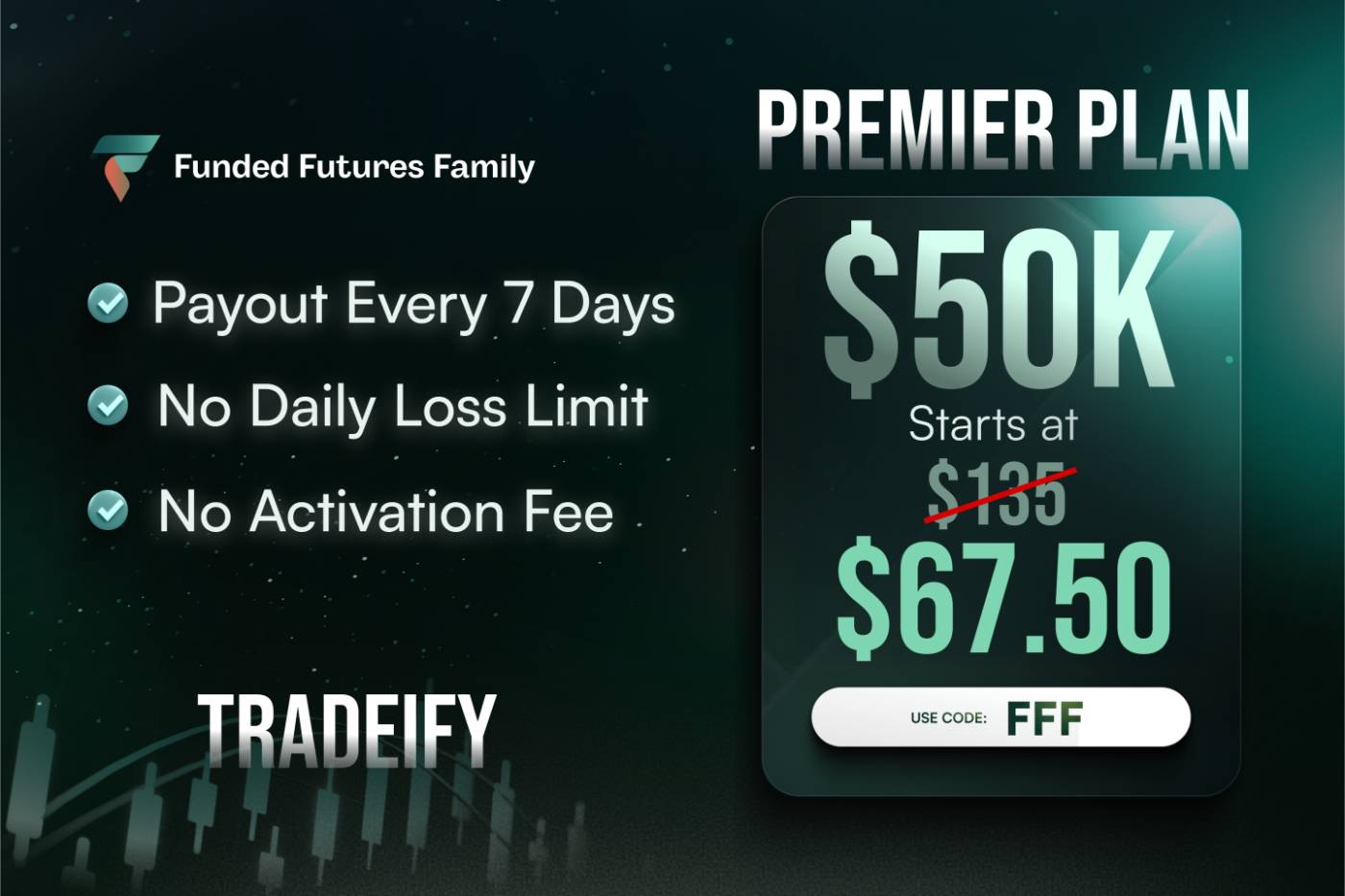
Funded Futures Family’s published payout policy rewards frequency and steadiness: 7 qualifying days with $+ gains is a very specific target that many traders can build a routine around. The consistency rules (40% or 25% by plan) still prevent extreme profit concentration, but the thresholds tend to be easier to satisfy than very tight caps when a trader is in the early stage of building a track record.
Why this can feel “simpler” to many traders
- It’s easier to plan: “I need 7 clean days” instead of constantly recalculating whether your biggest day broke a low percentage limit.
- The rules explicitly reset after each payout, which aligns with a repeatable cycle of “qualify → withdraw → restart.”
That predictability is the main reason Funded Futures Family gets a slight edge in a head-to-head comparison for traders who want fewer payout delays caused by one strong day.
A trader-first comparison table
| What Matters | Tradeify | Funded Futures Family |
|---|---|---|
| Consistency Rule | Funded: 35% (Advanced/Growth) or 20% (Lightning). Evaluation: none. | 40% (Prime, standard Velocity), 25% (S2F and S2F Accelerate), none on Premier+ accounts bought before September 9, 2026 (40% from that date). |
| How Payouts Get “Delayed” | A single oversized day can force you to keep trading until the math works. | Missing the plan’s qualifying days, failing consistency, or dropping below buffers can block payout. |
| Best Fit Trader | Someone who can keep daily profits smooth and doesn’t rely on spike days. | Someone who can reliably stack green days and prefers a scheduled, rules-based payout pathway. |
Slight favoritism Between The Props
Tradeify deserves credit for being transparent about its consistency thresholds and for clearly stating that evaluation accounts have no consistency rule. But Funded Futures Family stands tall when compared to other players in the industry like funding ticks for a different reason: its payout pathway is easy to audit (plan-specific qualifying days, a published consistency rule), and it’s designed to reduce the “one great day caused a payout delay” problem that traders often complain about with tighter percentage rules.
FAQ
Plan-level: S2F vs Tradeify’s instant funding
Both answer the same wish: skip the audition. Tradeify sells instant-funding plans (verify their current terms on their site); FFF’s Straight-to-Funded starts you on a simulated funded account from day one with a fully published ruleset — seven qualifying days of $200+, a 25% daily consistency requirement, End-of-Day drawdown, and staged payout maximums (that is S2F Standard; the 50K-only S2F Accelerate variant runs a never-locking intraday trail, five qualifying days, and a lifetime 25% rule, which makes it the closer like-for-like against Lightning), all on the payout & trading rules page. The honest difference to check before buying either: whose post-funding rules fit how you actually trade, because with instant funding the funded rules are the only rules you’ll ever trade under. The full, dated breakdown is S2F vs Tradeify Lightning; Select shoppers can compare Premier+ vs Select Flex and Velocity vs Select Daily.
Ready to earn
with the Family?
Join Tier 1 in minutes, get your code, and start earning 10% on every evaluation you refer.